
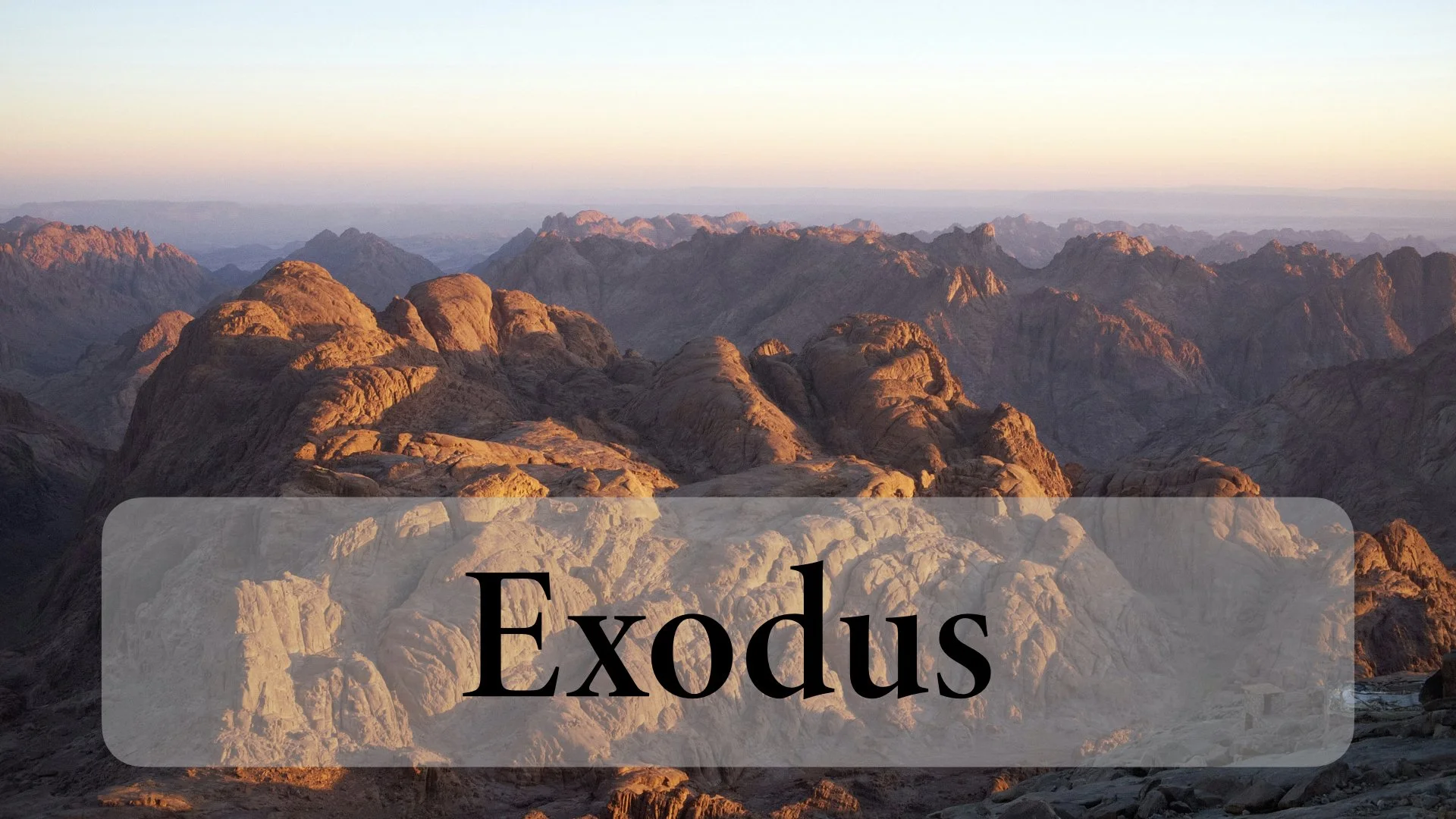
The book of Exodus contains some of the most familiar stories of the Old Testament. But woven through all of them is a larger story: the Lord is making Himself known. He reveals who He is to Israel, to Egypt, and ultimately to the nations through His acts of deliverance, judgment, provision, covenant, and presence.
Again and again, we see the faithfulness of Yahweh. He keeps His promises and provides for His people, even amid their grumbling, doubt, and idolatry. Exodus invites us not simply to remember these familiar stories, but to see the God who stands at the center of them—and to consider what it means to know and trust Him.
This series will correspond with our Fall Bible Studies. Each week’s sermon will come from one of the passages being explored in our Bible studies.
Want to go deeper into Exodus? We’ve curated the following resources around the four ways of engaging Scripture that we considered in The Scripture Practice.
September 20, 2026
The God Who Confronts Evil (Exodus 9:13-35)
In this week’s sermon we come to the seventh of the 10 signs of the Lord sends to Pharaoh and Egypt, the plague of hail. These signs reveal God’s power while at the same time showing us His willingness to offer mercy.
Pastor Omar Ortiz
September 13, 2026
The God Who Comes Down (Exodus 3:1-15)
At the burning bush the Lord reveals himself to Moses and reveals to Moses something about his own identity. In this week’s sermon, we explore what Exodus 3 teaches us about the Lord, Moses, and ourselves.
Pastor Omar Ortiz
September 6, 2026
The God Who Hears, Remembers, Sees and Cares (Exodus 2:23-25)
This Sunday we begin our 8-week series on Exodus, which will accompany our fall Bible studies. In Exodus 2:23-25, the Lord reveals his compassion. He hears, remembers, sees, and cares for them in their groaning.
Pastor Omar Ortiz
September 27, 2026
The God Who Provides a Substitute (Exodus 12:1-13)
After 9 powerful signs of the Lord’s power, we come to the final sign, in which the Lord strikes the firstborn of Egypt and passes over the firstborn of Israel. In this week’s sermon, we wrestle with the story and consider some of the many ways that this important story works its way into the rest of the story of Scripture.
Pastor Omar Ortiz
October 11, 2026
The God Who Provides in the Wilderness (Exodus 16:1-26)
Safely delivered from the threat of the Egyptians, the people begin to grumble and complain when they do not have enough food. Their response, and God’s provision, invites us to reflect on our own lives: How do we respond to the Lord in times of trial? What do our complaints reveal about our hearts?
Pastor Omar Ortiz
October 18, 2026
The God Who Responds to Intercessions (Exodus 32:1-14)
Israel has seen the Lord’s signs and wonders, heard his voice and entered into a covenant with Him. After all of this, they betray the covenant by crafting an idol of a golden bull. This week we see God revealed as the one who responds to intercession.
Pastor Omar Ortiz